On-Prem AI Server vs Cloud GPU: When Buying Beats Renting (India 2026)
By Rohit, Founder ·
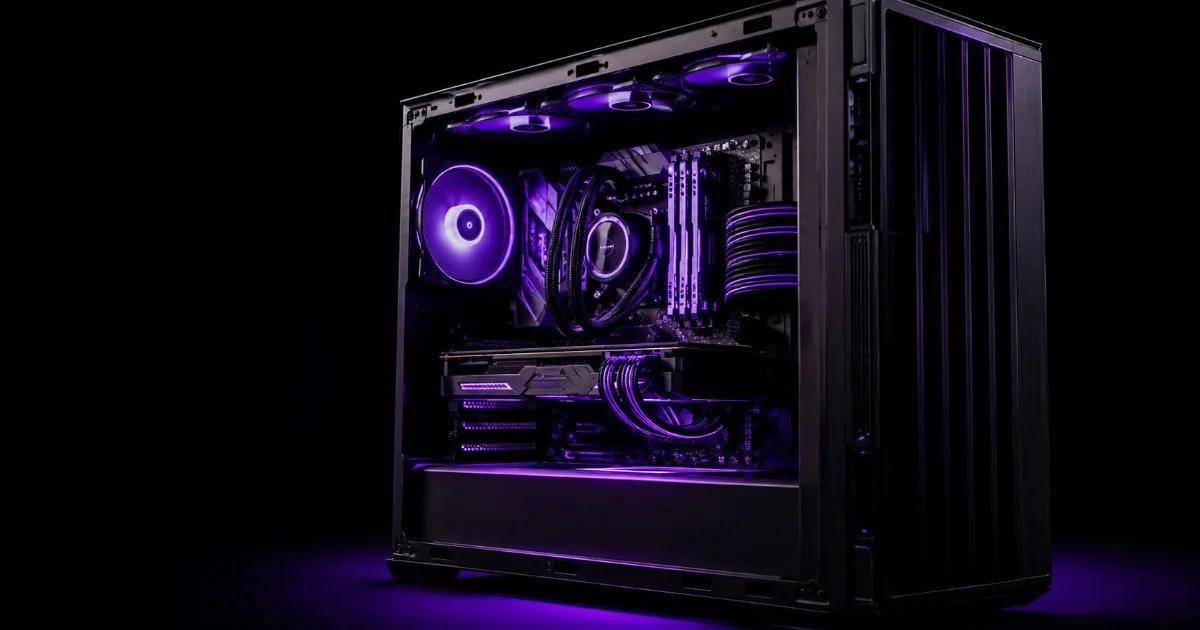
The on-prem AI server vs cloud GPU question is the first real budget decision most Indian AI teams face. Cloud GPUs are brilliant for starting fast, but once your training and inference workloads run steadily, the monthly bill can quietly become your single largest line item. This guide gives you an honest, vendor-neutral way to think about buy vs rent GPU in India for 2026 — including the cases where cloud genuinely remains the smarter choice.
The core trade-off: utilisation
Cloud GPU pricing is built around flexibility. You pay by the hour, spin up when you need it, and shut down when you don't. That is excellent value when your GPUs sit idle most of the week. The moment they don't, the maths flips.
The single most important number in this decision is utilisation — what fraction of the day your GPUs are actually busy. A simple way to think about it:
- Low utilisation (a few hours a week, unpredictable bursts) — renting almost always wins.
- Medium utilisation (regular but not constant) — it depends on data, latency and team size.
- High utilisation (GPUs busy most of the working day, every day) — owning typically pays back within months, then keeps saving.
Once a workload is steady and high, an owned machine has no per-hour meter running. That is the heart of the break-even argument.
Understanding the break-even point
You don't need a spreadsheet PhD to find your break-even. Take the realistic monthly cost of the equivalent cloud GPU instance you'd actually reserve, then compare it against the one-time cost of an owned server amortised over its useful life (3–5 years is reasonable for well-built hardware), plus power and cooling.
For teams running GPUs at high utilisation, owned hardware often pays for itself surprisingly quickly — and everything after that point is effectively margin you keep. The longer your project horizon, the stronger ownership looks, because cloud charges never stop while a purchased asset keeps working. If you want help sizing a build to your exact workload, our free consulting team does this kind of break-even modelling regularly.
Costs the cloud invoice doesn't show upfront
Beyond the per-hour GPU rate, cloud bills carry costs that are easy to underestimate:
- Egress / data transfer fees — moving large datasets and model checkpoints out of the cloud is metered, and for data-heavy AI work it adds up.
- Storage — persistent volumes for datasets and artefacts bill continuously, even when GPUs are off.
- Premium instances — the newest GPUs are the priciest, and on-demand rates carry a flexibility surcharge.
- Idle waste — instances left running between experiments quietly burn budget.
An owned AI/ML server has none of these meters. Your data stays put, transfers between storage and GPU are free, and the cost is predictable month to month.
Data control, privacy and compliance
For many Indian businesses — fintech, healthcare, legal, defence-adjacent and enterprise R&D — where the data physically lives is not a preference, it's a requirement. On-premises hardware keeps sensitive datasets and proprietary models inside your own building and your own network, which simplifies compliance under India's DPDP regime and customer data agreements.
This is a major reason dedicated AI and ML labs and research teams lean towards owned infrastructure: full custody of training data, no third-party access, and no dependence on a provider's regional policies.
Latency and predictable performance
An owned server sitting on your LAN gives you consistent, low-latency access to your GPUs — no shared multi-tenant queues, no waiting for instances to become available in your region, no noisy-neighbour variability. For interactive development, real-time inference and tight experiment loops, that responsiveness compounds into real productivity. You also control the full stack — drivers, CUDA versions, libraries — without a provider's image constraints.
When cloud still wins — be honest
Buying is not always right, and a good vendor will tell you so. Cloud GPUs are the better call when:
- Your project is short, one-off, or a proof of concept with no long-term horizon.
- Demand is genuinely bursty and unpredictable — occasional huge spikes, mostly quiet otherwise.
- You need the absolute latest GPU for a brief experiment and don't want to own it.
- You must scale to dozens of GPUs for a few days, then back down.
- You have no space, power, or in-house ability to host hardware.
Many mature teams end up hybrid: own a baseline AI server for steady daily work, and burst to cloud for occasional peaks. That captures predictable cost on the bulk of the load while keeping elasticity for the spikes.
A simple framework founders can apply
Before committing either way, answer five questions honestly:
- Utilisation: Will GPUs be busy most of the working day, most days? High and steady leans buy.
- Horizon: Is this a multi-year capability or a short project? Long horizon leans buy.
- Data: Does privacy, compliance or egress cost matter? Sensitive or data-heavy leans buy.
- Burstiness: Is demand spiky and unpredictable? Very bursty leans rent.
- Operations: Can you host and support hardware, or want it managed? No space leans rent.
If most answers point to owning, the next step is matching the right build to your models — GPU count and VRAM, CPU, ECC memory and NVMe — rather than over-buying. You can compare suitable configurations on our servers range or tailor one on the customise page. Owned infrastructure also suits steady production inference for IT and SaaS teams that run models around the clock. For a broader view of refurbished and enterprise options, Serverwale covers the wider hardware landscape too.
How an owned ProStation AI server pays off
A purpose-built ProStation AI server is configured around your actual workload — the right NVIDIA GPUs, Intel Xeon Scalable or AMD EPYC platform, ECC memory and NVMe storage — so you aren't paying for capacity you don't use. Brand-new components, a 1–3 year warranty and 24/7 support mean the asset keeps earning across its life, while your costs stay flat and predictable instead of climbing with every cloud invoice.
Not sure where your break-even sits? Tell us your models, utilisation and data requirements, and our team will model buy vs rent for your specific case — no pressure, and we'll say so if cloud is the better fit. Start a free consultation or design your build on the customise page.