Power Backup & UPS Sizing for Servers and Workstations (India, 2026)
By ProStation Systems Team ·
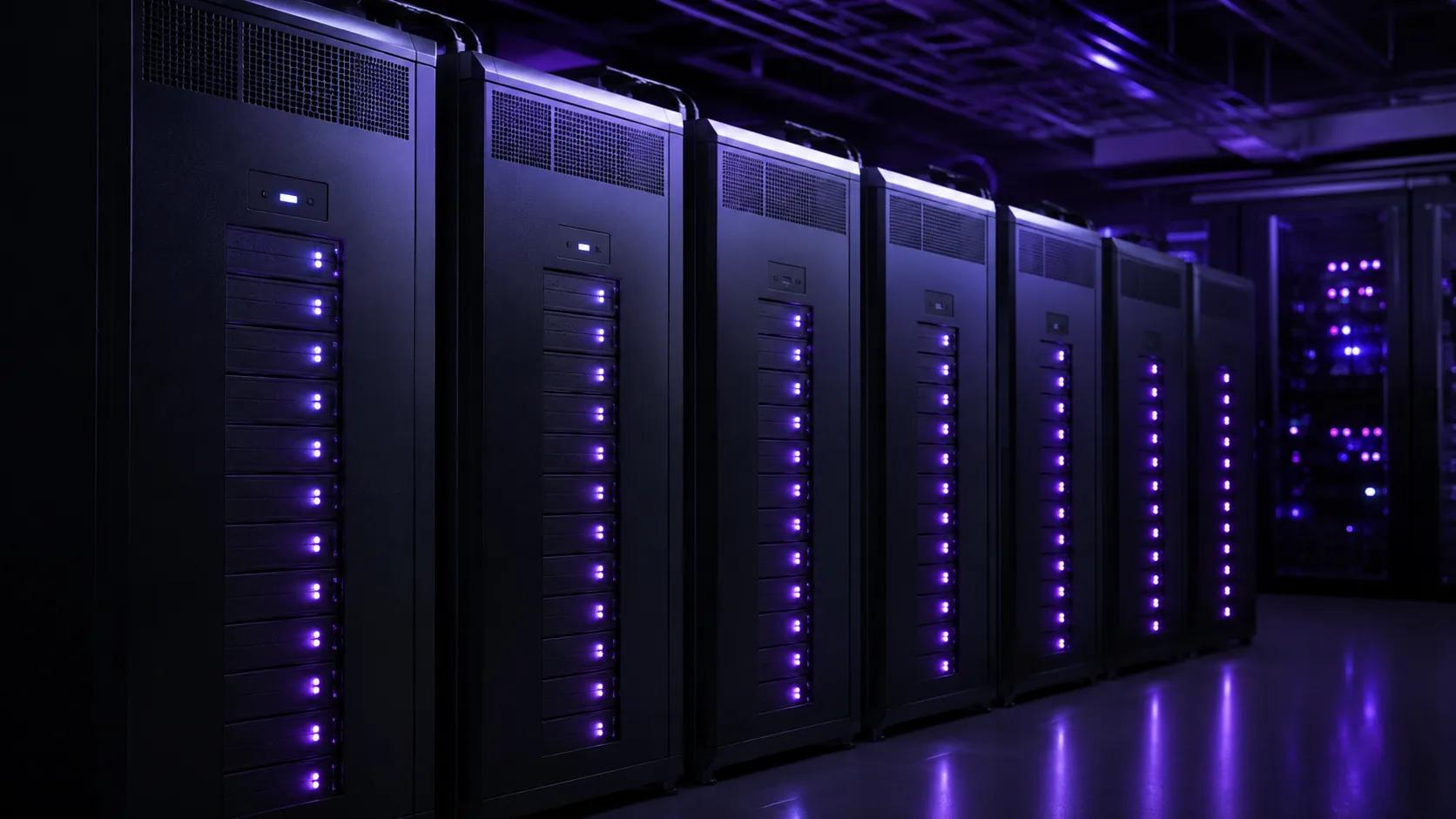
Quick answer: Size your UPS to the server or workstation's real power draw (not its PSU rating), add 25-30% headroom for inrush and future upgrades, and pick a true online double-conversion UPS for any server that can't tolerate a power blip. A single Starter-tier tower server typically needs a 1-1.5 kVA online UPS for 10-15 minutes of runtime; a GPU-heavy Ultra-tier training rig can need 3 kVA or more. This guide walks through the actual math so you don't over-pay or under-protect.
India's grid is not the problem it was a decade ago, but voltage fluctuations, short outages and the occasional multi-hour cut are still routine in most cities — and a server or workstation reacts very differently to a bad power event than a laptop does. A laptop has a battery built in. A tower server does not. An unclean shutdown mid-write can corrupt a database, break a RAID rebuild, or silently damage a checkpoint file hours into an AI training run. Getting the power backup right is as much a part of specifying a server as the CPU or RAM is — it just gets skipped more often.
Why "just get a UPS" isn't a real answer
Every server buyer eventually asks some version of "what UPS do I need?" — and the honest answer depends on three things: how much power the machine actually draws under load, how long you need it to stay up during an outage, and how sensitive the workload is to even a few milliseconds of power interruption. Skip any one of these and you either buy a UPS that trips under real load, or one that's needlessly expensive for what you actually need.
Step 1: Find the real power draw, not the PSU rating
A common mistake is sizing a UPS off the server's power supply unit (PSU) wattage rating. A PSU rated at 850W is not drawing 850W continuously — that's its maximum capacity, usually with headroom built in. The number that matters is the sustained load the system pulls when it's actually working.
- Starter-tier servers (entry Xeon/EPYC, 16-64GB ECC RAM, optional GPU, mainly file/app/web serving) — modest, steady draw. These are the easiest to size for and the cheapest to protect.
- Pro-tier servers (Xeon Scalable/EPYC Milan, 64-256GB ECC RAM, virtualization or databases, optional single RTX GPU) — meaningfully higher draw, and it rises further under sustained VM or database load rather than staying flat.
- Ultra-tier servers (dual EPYC Genoa/Xeon Scalable, 256-512GB ECC RAM, 1-4 NVIDIA GPUs for AI/ML or rendering) — by far the largest and most variable draw. A multi-GPU training rig under full load pulls dramatically more power than the same box sitting idle, because the GPUs themselves are the dominant power consumers once they're saturated.
The practical way to get an accurate number for your own build isn't to guess from a spec sheet — it's to measure the actual system with a plug-in power meter while it's running your real workload (or ask ProStation Systems for the measured draw on the exact configuration you're ordering, since it depends heavily on which GPU, CPU and drive count you pick).
Step 2: Convert watts to VA, then add headroom
UPS capacity is rated in VA (volt-amps), not watts, and the two aren't the same number. VA = Watts ÷ Power Factor. For modern server PSUs with active power factor correction, the power factor is usually close to 0.9-0.95, so watts and VA end up fairly close — but cheaper or older UPS units are often rated with a 0.6-0.7 power factor assumption, which is why a "1000VA" budget UPS may only deliver 600-700W of real, usable power. Always check a UPS's actual wattage rating, not just its VA number, before assuming it can run your server.
Once you know the real sustained wattage, add 25-30% headroom. This isn't padding for its own sake — it covers three real things: the inrush current spike when the server powers on, the fact that a UPS running near 100% of its rated capacity has almost no margin for a brief spike, and room to add a drive, a second GPU, or more RAM later without immediately outgrowing the UPS.
Step 3: Decide how long you actually need to run
Runtime is where a lot of buyers overspend or underspend, because the honest answer is usually "just long enough to shut down cleanly or for the generator/grid to come back" — not "run for hours." A few realistic scenarios:
- Clean shutdown only — you just need 5-10 minutes to trigger an automatic, graceful shutdown script before the battery runs out. This is the cheapest and most common setup for a single server or workstation, and it's the single biggest thing that prevents data corruption during an outage.
- Bridge to a generator or grid recovery — if outages in your area are typically short (a few minutes to under an hour) and you don't have a generator, 20-30 minutes of runtime is a reasonable middle ground.
- Continuous operation through longer cuts — only worth engineering for if the workload genuinely cannot tolerate any downtime (a production database, a live service, a multi-day training run you don't want to restart). This needs either a much larger battery bank or a generator handoff, and it's a real cost trade-off, not a default.
For most home labs, small offices and single-server setups, "clean shutdown only" with 10-15 minutes of runtime is the right call — it protects the thing that actually matters (data integrity) without paying for capacity you'll rarely use.
Step 4: Pick the right UPS topology, not just the biggest number
Not all UPS units behave the same way during a power event, and for a server this matters more than for a desk lamp:
- Line-interactive UPS — the common, affordable option. It corrects moderate voltage sags and surges without switching to battery, and only switches to battery for a real outage. There's a small transfer time (a few milliseconds) which most server PSUs handle fine, but it's not zero.
- Online double-conversion UPS — the server-grade option. The output is continuously regenerated from the battery, so there's zero transfer time and the server sees clean, stable power at all times, even during voltage fluctuations. This is the right choice for anything running a database, a hypervisor, or a long unattended job — the kind of workload where even a brief glitch matters.
For a Starter-tier file/app server, a good line-interactive unit is often enough. For Pro and Ultra-tier servers running virtualization, databases, or long AI/ML training jobs, an online double-conversion UPS is worth the extra cost — the whole point of ECC memory and RAID redundancy is protecting data integrity, and clean, always-conditioned power is part of that same story.
A rough starting point by tier
These are general planning ranges to start a conversation, not a substitute for measuring your exact configuration — GPU count and storage count especially can shift a system to either end of its tier's range:
- Starter tier — typically sits comfortably on a 1-1.5 kVA line-interactive or online UPS for a clean 10-15 minute shutdown window.
- Pro tier — usually needs 1.5-2.5 kVA, and an online unit is the safer default once you're running virtualization or a database on it.
- Ultra tier — with one or more GPUs under sustained AI/ML or rendering load, plan for 2.5-3.5+ kVA on an online double-conversion UPS, and confirm the exact figure against your chosen GPU count and CPU configuration rather than assuming the low end.
Don't forget the network gear
A server with clean power behind it is still useless mid-outage if the switch, router or modem it talks to goes dark. If continuity through short outages matters to you, size a small secondary UPS (even 600VA-1kVA) for your networking rack alongside the server's own UPS — it's a cheap insurance policy that's easy to forget until the one time it would have mattered.
Frequently Asked Questions
How many kVA UPS do I need for a small business server?
It depends on the server's real sustained power draw and how long you need it to run, but a single Starter or Pro-tier tower server typically needs 1-2.5 kVA for a clean 10-15 minute shutdown window. Measure the actual draw of your configuration, or ask ProStation Systems for the figure on the exact build you're ordering.
Is a line-interactive UPS enough for a server, or do I need online?
A line-interactive UPS is fine for a Starter-tier file or app server where a few milliseconds of transfer time won't matter. For anything running virtualization, a database, or a long unattended job (like AI/ML training), an online double-conversion UPS is the safer choice because it delivers continuously clean power with zero transfer time.
Should I size the UPS off the PSU wattage rating?
No — the PSU rating is its maximum capacity, not what the server actually draws. Size the UPS off the measured sustained power draw under real workload, then add roughly 25-30% headroom for inrush current and future upgrades.
How long should my server run on battery during an outage?
For most single-server setups, 10-15 minutes is enough to trigger a clean automatic shutdown, which is what actually protects your data. Only plan for longer runtime if the workload genuinely cannot tolerate downtime, since that requires a much larger (and costlier) battery bank or a generator handoff.
Does a multi-GPU AI server need a bigger UPS than a regular server?
Yes. GPUs under sustained training or rendering load are typically the dominant power draw in an Ultra-tier system, so a multi-GPU rig needs meaningfully more UPS capacity than a Starter or Pro-tier server — plan for 2.5-3.5+ kVA on an online UPS and confirm against your exact GPU count.
Getting the sizing right on the first build
Power backup sizing is easiest to get right at the same time you spec the server, not as an afterthought — because the CPU, GPU count and drive configuration you choose directly decide what UPS you'll actually need. ProStation Systems builds brand-new, engineer-specced tower servers across the Starter, Pro and Ultra tiers, and can tell you the real measured power draw for your exact configuration so you size backup power correctly the first time, instead of guessing off a spec sheet. Related reading: our guides on RAID levels and redundancy, why workstations overheat and how cooling design prevents it, and our AI & ML server use-case guide for GPU-heavy builds. If you're specifying a new server or workstation, configure your build or talk to our team about sizing both the hardware and the power backup around your real workload.